


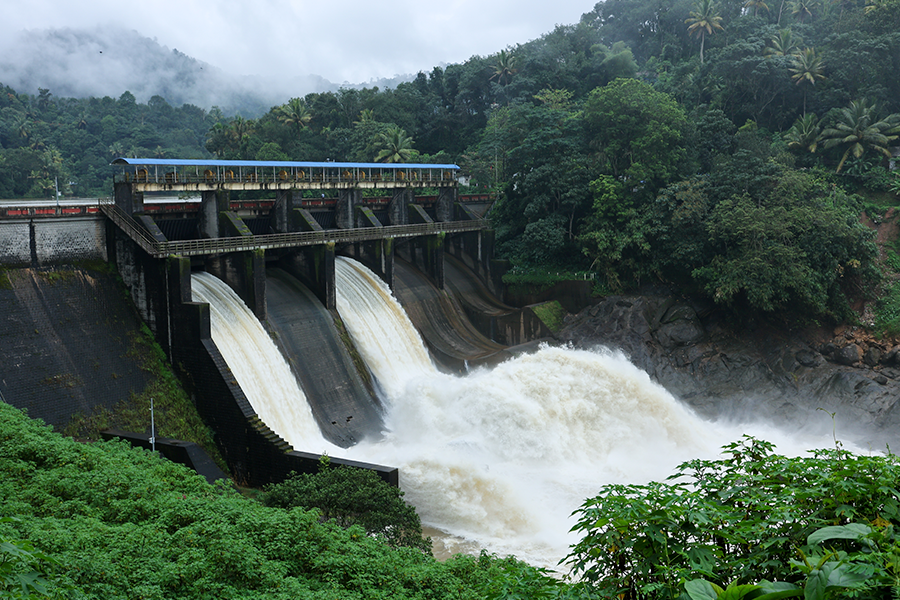
Dr. Jorge Castillo-Sepúlveda, academic at the FAHU School of Psychology and Vice Dean of Research and Postgraduate Studies, together with Jhonathan Castro Pino, are leading the cutting-edge project entitled "Towards a river biopolitics: a case study of hydroelectricity from Itaipú," funded by the Usach Office for Scientific and Technological Research through its 2025 competition.
This study proposes a critical analysis of how hydroelectric infrastructure, specifically hydropower dams, affects not only natural ecosystems but also the sociopolitical dynamics of Amazonian communities that depend on river systems and require new river management policies.
"The initiative for this research arose from a collaborative effort with the Institute for Advanced Studies on Amazonian cosmopolitics,” explains Dr. Castillo, emphasizing the importance of understanding how hydroelectric plants fundamentally change the lives and socio-environmental conditions of affected communities.
The concept of river biopolitics, central to the research, seeks to account for the total impact of these hydroelectric interventions on Amazonian populations and their unique relationship with their territories. “It is about capturing the dynamic and mobile component of biopolitics, understanding how the regularities of population life are transformed with the construction of this type of river infrastructure,” says the researcher.
One of the objectives of the study is to analyze the institutional and political changes that emerge as a result of these socio-environmental issues. "On the one hand, we seek to capture how public policies are transformed to try to absorb these situations. And, on the other hand, to understand how the nomadic quality of certain Amazonian communities makes it difficult for them to articulate themselves within the existing institutional framework of the nation-state,“ explains Castillo.
The Itaipú case study is paradigmatic because it clearly shows how hydroelectric plants alter multiple dimensions of local life. ”These hydroelectric infrastructures have a much greater socio-environmental impact than is commonly thought. Not only do they modify the landscape or water resources, but they also transform mobility, culture, and the way local communities interact with their environment,“ warns the academic.
Castillo also points out that these affected populations are often left out of the logic of nation-states and development projects. ”Often, the affected communities are not understood or integrated into institutional policies. They escape the government dynamics related to environmental justice as we know them,“ he argues.
The researcher also emphasizes the need to develop new sensibilities to these complex issues. ”It is essential to consider ways of life that are not usually taken into account in public policy analysis. Hydroelectric plants generate impacts that require other types of approaches, more attentive to socio-environmental transformations and human rights," he comments.
From the Faculty of Humanities (FAHU), the research is linked to a critical tradition and approaches that seek to broaden the frameworks of knowledge on sustainable development: “The faculty promotes a specific sensitivity to the socio-natural transformations we are experiencing today. In that sense, this study is aligned with the values of our academic community,” Castillo points out.
Collaborative work has been key to developing the project, coordinating efforts among different academic units to study the hydroelectric impact. “This type of research allows us to generate synergies and think about joint solutions to environmental and social problems that affect us all,” concludes the academic.
The research by Jorge Castillo-Sepúlveda and Jhonathan Castro Pino offers a critical perspective on the impact of hydroelectric dams on communities and ecosystems, questioning river management policies. Their approach invites us to rethink the relationship among infrastructure, territory, and the life of the population. In doing so, it opens up new discussions on environmental justice and the rights of affected communities.