


Chile is enduring one of the most severe mega-droughts in its history, with General Water Directorate (DGA) data recording over 15 years of continuous water scarcity. This unprecedented water crisis has drastically increased pressure on natural resources while raising critical concerns about the environmental footprint of major industrial sectors.
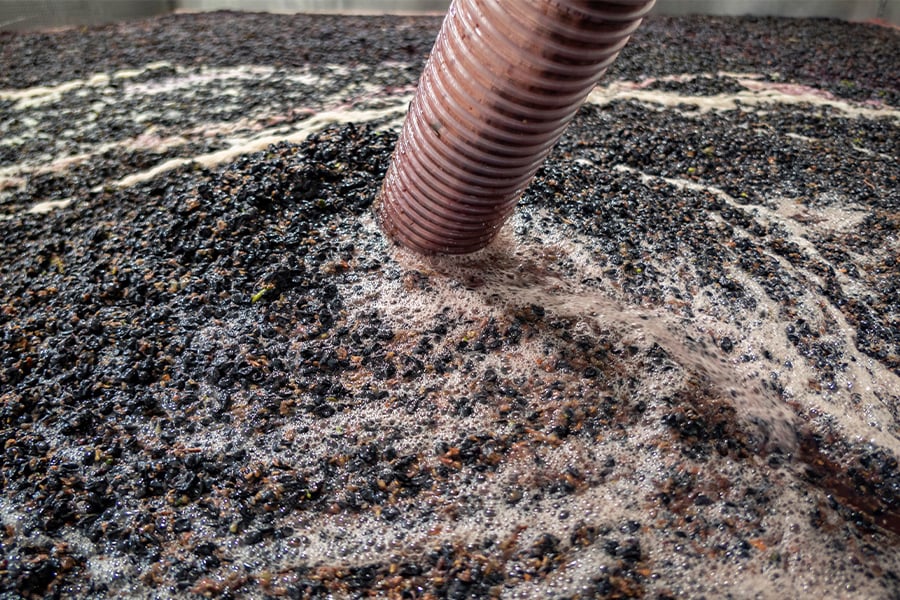
Despite severe water scarcity, Chile maintains its position as the world’s fourth-largest wine exporter. However, high-volume production—including grape harvesting, tank cleaning, and fermentation—generates millions of liters of winemaking wastewater annually, making sustainable industrial waste management and water conservation top priorities for the sector.
Due to its high organic load, untreated winery wastewater poses severe environmental risks, including soil and water contamination. Compounding these industrial challenges, solid waste from mining and metallurgy requires specialized waste treatment, resource recovery, and safe disposal solutions.
In response to this problem, Dr. Yeney Lauzurique, a faculty member in the Department of Chemical and Bioprocess Engineering and a researcher at the Dr. Silvio Montalvo Environmental Biotechnology Laboratory (Labiotam), is leading a Fondecyt Iniciación project that aims to transform industrial waste into a source of clean energy.
The research focuses on converting winery wastewater into green biohydrogen through anaerobic digestion—a biological process where microorganisms decompose organic matter without oxygen. “Our goal is to tackle critical environmental challenges through a circular economy framework, transforming industrial waste into valuable resources for other sectors,” explained the lead researcher.
One of the project’s central aspects is the use of mining waste and iron-rich steel shavings—materials that stimulate the activity of the microorganisms responsible for biohydrogen production.
“Iron is essential for the functioning of enzymes involved in biohydrogen production. Instead of using costly chemical additives, we propose using industrial waste that is abundant in Chile,” noted the researcher.
Beyond biohydrogen production, the project delivers a total wastewater treatment solution designed for maximum energy recovery and water reclamation. Following initial hydrogen generation, the system integrates biomethane production (anaerobic digestion) or advanced electrochemical oxidation to purify effluent—producing high-quality reclaimed water suitable for agricultural irrigation and industrial reuse.
Over its three-year timeline, the research will evaluate how industrial byproducts—specifically mining waste and iron-rich steel shavings—can boost biohydrogen production rates. The team will then test the system under real-world industrial operating conditions, culminating in a comprehensive techno-economic feasibility study and process integration assessment.
Through this approach, the project advances sustainable technologies that merge bioenergy production, advanced wastewater treatment, and industrial waste recovery—delivering scalable solutions to Chile’s most urgent environmental and energy challenges.
“We hope to contribute to a transition toward a more resilient, low-carbon economy, where industrial waste is no longer seen as a problem but rather as an opportunity to generate energy and address challenges such as water scarcity and the climate crisis,” concludes Dr. Lauzurique.