


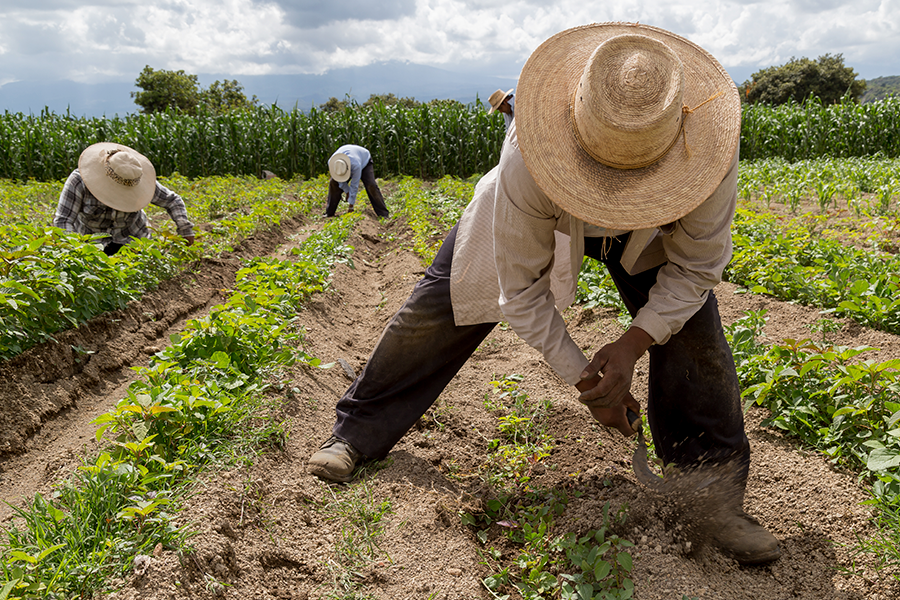
The Agricultural Development Institute (Indap) has provided $5.25 billion pesos in funding to the Department of Industrial Engineering for a new program: the “Technology Transfer and Productive Investment Program for Peasant and Indigenous Family Farming (AFCI)” in the Atacama Region.
More than 800 small-scale farmers will directly benefit from this 18-month initiative. It uses a comprehensive model that integrates technical advice, productive investment, specialized training, and technology transfer to promote sustainable and equitable practices with local relevance.
Leading the project is academic Dr. Pedro Palominos Belmar, who sees the award as strategically vital. He stated, “This program is a concrete example of our university’s commitment to the territories. It validates the contribution of engineering and management to the sustainable development of the country.” The technical coordination also includes Dr. Luis Quezada, who works in the same department.
The initiative has four main components:
• Assessing farmers’ needs: Technical analysis of users based on their local productive sectors and conditions.
• Creating individual plans: Develop and implement personalized production plans in collaboration with the farmers.
• Executing productive investments: The project will prioritize investments that improve water efficiency, mechanization, and climate resilience.
• Providing training and technology: Technology transfer, workshops, consulting, and technical field trips to help farmers succeed. In addition, Usach will implement digital systems for program monitoring, traceability, and accountability, ensuring efficiency and transparency at every stage.
“This award from Indap gives our university and faculty a real chance to develop applied R&D projects,” the academic explained. “The first phase is crucial—it involves rigorous land use planning to map all 800 beneficiaries, rank our priority interventions, and create a georeferenced database with comparable production data.”
He added that this data is used to create guidelines for each sector, directing investments in infrastructure, training, and technical support. This will create a “living laboratory” where the university can test prototypes for precision agriculture, water management, and mechanization under real-world conditions.
“The continuous flow of data will enable us to develop new research in rural analytics and climate resilience,” the academic from the Department of Industrial Engineering explained. “It will also provide concrete cases for theses, internships, and indexed publications.” He added that the initiative ultimately “consolidates our university as a leader in rural innovation, strengthens the training of advanced human capital, and enhances our institutional strategy of community engagement and technology transfer.”
National Impact and Institutional Leadership
This project represents a landmark award for the university and a significant consolidation of the Department of Industrial Engineering’s function as a public policy coordinator for rural innovation and development.
Aligned with the INDAP 2023-2030 Strategy, the proposal was praised for its comprehensive approach, which integrated territorial characterization, productive infrastructure investment, and sustainable technology transfer. The project’s professional team, the operational capacity of the University’s Secretariat for Territorial Development (SDT), and the team’s proven experience in complex project management were all cited as key strengths.
Project manager Dr. Palominos stated, “With this award, the University of Santiago de Chile demonstrates that public engineering and open science can effectively close productivity gaps and advance sustainable and inclusive rural development. This simultaneously strengthens our research and the training of professionals dedicated to serving the country.”
Engagement in transformative projects of this nature consolidates Usach and the R&D generated by the Faculty of Engineering as a vital contributor to public policies for sustainable development. It reinforces the institution’s commitment to community engagement, technology transfer, and support for historically neglected sectors.