


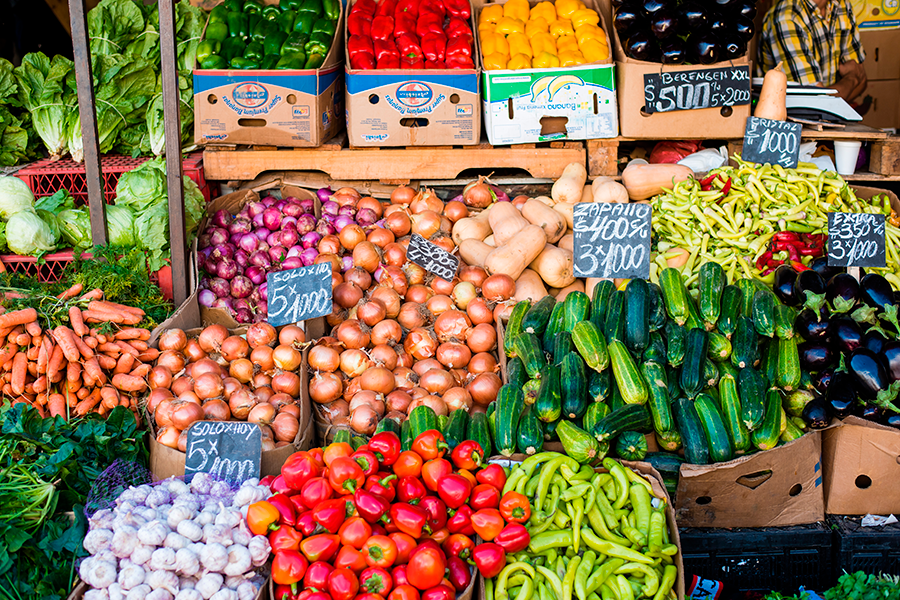
Food, more than just a daily activity, is a reflection of a country's social, economic, and cultural organization. This is the view of Claudia Deichler, graduated from the Master's in History at FAHU, who has developed pioneering research in the area of food history, combining the rigor of her academic training with dissemination on social media, through spaces such as the Instagram account @historia_dela_alimentacion.
From her perspective, school meals, access to local products, and street trade form a network that requires historical consideration to generate sustainable solutions. "School diets should rely on local production. The current system fails to nourish those who produce the food, a long-term, unresolved issue that stems from a lack of historical context," she explains.
Warning that economic and structural barriers to a healthy diet remain in Chile despite its high food production, Deichler attributes the problem to market incentives. "The current mercantilist and export-first view is the issue," she says. "Producers earn more by selling overseas than by supplying locals, making food unnecessarily expensive for a country that produces so much."
Her analysis of street vending links it directly to migration, informal employment, and urban planning. Deichler affirms that street food is a valuable part of "our Latin American culture" and shouldn't be eliminated. The issue, she argues, is the "overflow and lack of control." She criticizes the reliance on "patchwork solutions," like police deployment, which fail to address the root causes of the phenomenon.
The researcher emphasizes that the discussion on food must consider factors like time, geographical access, and the pace of modern life. She explains the consequences of these constraints: "Cooking takes time, buying fresh produce takes time and money, and in big cities, there are people who spend four hours a day just commuting. Eating becomes a chore, and that has an impact on health: obesity, diabetes, and hypertension," she points out.
For Deichler, the challenge isn't simply about improving distribution or expanding supply, but about ensuring that healthy food is accessible and meets the population's needs. "Our model focuses on opening up the market," she reflects, "but the counterpart is missing: ensuring that people can consume what is available. Otherwise, it's like 'a slap in the face' to the population."
Finally, she issues a call to action for researchers and students to join this field of study, which is still in its infancy in the country. "There are very few of us working on food history in Chile, and almost everything remains to be done," she notes. "Whatever you research, no matter how small, will be a contribution. It's an open field that allows for a lot of creativity and invites us to connect the historical archive with current issues," she concludes.